Laura K. Nelson
Laura K. Nelson
Professional Appointments
Publications
Teaching
Talks
Online Posts & Media
Contact
CV
Light
Dark
Automatic
2
The NSF ADVANCE Network of Organizations
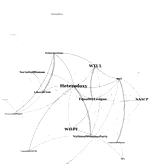
As the ADVANCE program celebrates its 20th anniversary, we describe the growth and composition of the organizational network over the past two decades to explore the breadth and reach of the ADVANCE program in the U.S. higher education system.
Jessica R. Gold
,
Alexander J. Gates
,
Syed A. Haque
,
Miranda C. Melson
,
Laura K. Nelson
,
Kathrin Zippel
PDF
Cite
DOI
And the Rest is History: Measuring the Scope and Recall of Wikipedia’s Coverage of Three Women’s Movement Subgroups
Narrating history is perpetually contested, shaping and reshaping how nations and people understand both their pasts and the current moment. Measuring and evaluating the scope of histories is methodologically challenging. In this paper we provide a general approach and a specific method to measure historical recall.
Laura K. Nelson
,
Rebekah Getman
,
Syed Arefinul Haque
PDF
Cite
Code
DOI
Leveraging the Alignment Between Machine Learning and Intersectionality: Using Word Embeddings to Measure Intersectional Experiences of the Nineteenth Century U.S. South
I empirically demonstrate the alignment between machine learning and inductive research through a word embedding model of first-person narratives of the nineteenth-century U.S. South.
Laura K. Nelson
PDF
Cite
Code
DOI
Cycles of Conflict, a Century of Continuity: The Impact of Persistent Place-Based Political Logics on Social Movement Strategy
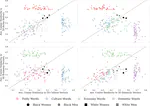
Using a combination of network analysis, computational text analysis, and qualitative interpretation, the author examines women’s movement discourses across the first and second waves of activism and between two sites, New York City and Chicago. Place, she finds, serves to capture differences in political logics that generate durable differences within movement discourse.
Laura K. Nelson
PDF
Cite
DOI
From Theory to Practice and Back: How the Concept of Implicit Bias was Implemented in Academe, and What this Means for Gender Theories of Organizational Change
Using an inductive, theory-building approach and combination of computational and qualitative methods, we investigate how the concept of implicit bias was translated into practice through the ADVANCE program and identify five key features that made implicit bias useful as a change framework in the academic STEM setting.
Laura K. Nelson
,
Kathrin Zippel
PDF
Cite
DOI
The Future of Coding: A Comparison of Hand-Coding and Three Types of Computer-Assisted Text Analysis Methods
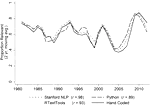
This article compares three common computer-assisted approaches—dictionary, supervised machine learning, and unsupervised machine learning—to those produced through a rigorous hand-coding analysis of inequality in the news.
Laura K. Nelson
,
Derek Burk
,
Marcel Knudsen
,
Leslie McCall
PDF
Cite
Code
DOI
The Meaning of Action: Linking Goal Orientations, Tactics, and Strategies in the Environmental Movement
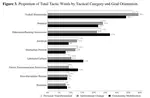
Using the U.S. environmental movement as a case study, and employing a data-driven and inductive strategy that combines both computational and qualitative methods, we find that strategy emerges as organizations link their actions to their goal orientation: what level of society the organization views as the locus of change.
Laura K. Nelson
,
Brayden G King
PDF
Cite
DOI
Computational Grounded Theory: A Methodological Framework
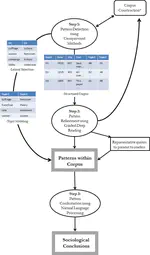
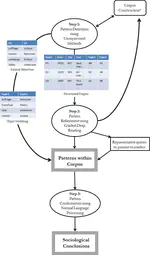
This article proposes a three-step methodological framework called computational grounded theory, which combines expert human knowledge and hermeneutic skills with the processing power and pattern recognition of computers, producing a more methodologically rigorous but interpretive approach to content analysis.
Laura K. Nelson
PDF
Cite
Code
DOI
To Measure Meaning in Big Data, Don’t Give Me a Map, Give Me Transparency and Reproducibility
In an attempt to reorient the field toward a new standard for measuring meaning in big data, one based on transparency and replicability, I propose five guidelines to evaluate any text-analysis project.
Laura K. Nelson
PDF
Cite
DOI
How do we nurture an academic landscape that is more accessible to women? Let’s start by getting rid of the in-person interview
In the lead up to International Women’s Day on Friday March 8th, SAGE Ocean posed a series of questions to leading academics. In this post I explores how we nurture an academic landscape that is more accessible to women.
Laura K. Nelson
Last updated on Oct 14, 2022
Read the Full Essay
«
»
Cite
×